What to Know About Loxahatchee Groves Acreage Homes
June 11, 2026
June 11, 2026
Dreaming about a home with room to spread out, keep horses, grow something, or simply enjoy more privacy? Buying acreage in Loxahatchee Groves can offer all of that, but it also comes with a very different checklist than buying in a typical Palm Beach County neighborhood. If you are considering land here, it helps to understand zoning, drainage, road access, utilities, and upkeep before you fall in love with a property. Let’s dive in.
Loxahatchee Groves is known for its rural and agricultural setting, not a standard subdivision layout. Town guidance says most lots are 5 acres or more, and the area is shaped by open land, drainage features, and a strong rural-equine character.
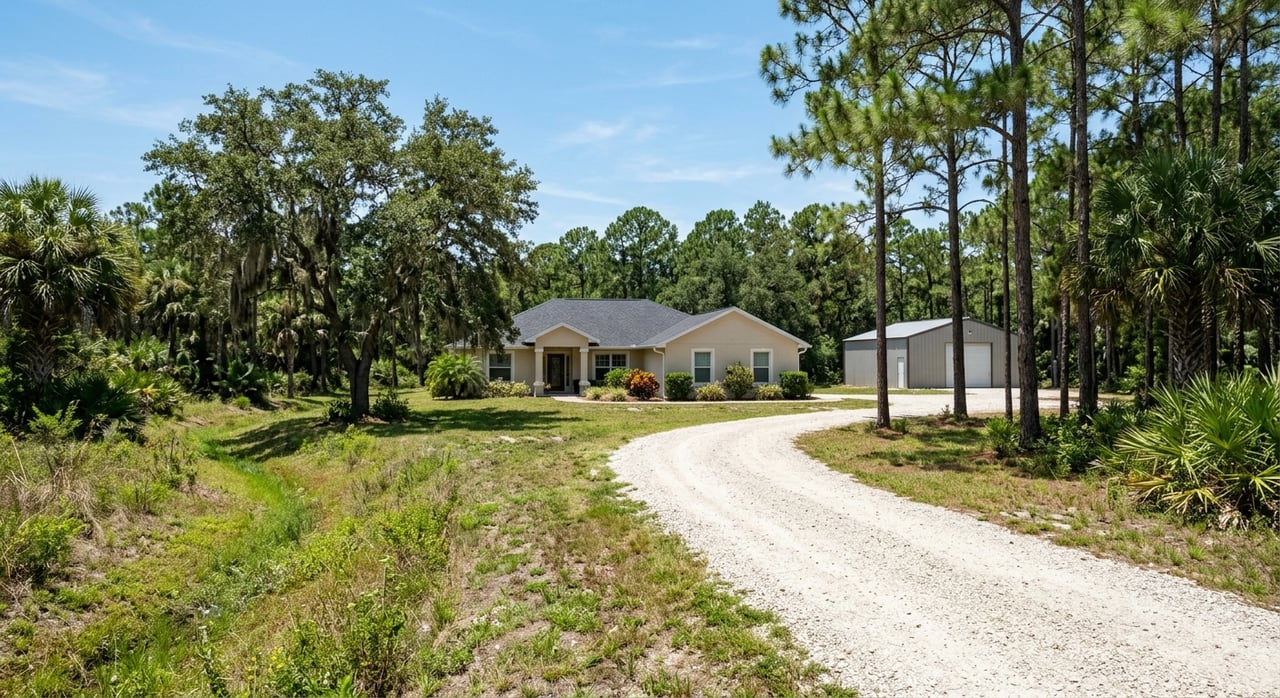
For you as a buyer, that usually means more land and more responsibility. You may be managing long driveways, swales, pasture space, tree care, irrigation, mowing, and storm preparation instead of relying on a typical neighborhood setup.
It also means you should not assume the full parcel can be used however you want. Lot shape, easements, drainage, and protected areas can affect where you can place a house, barn, fence, paddock, or other improvements.
A home on acreage can look simple at first glance, but the details matter. In Loxahatchee Groves, road and drainage issues are part of daily life because infrastructure has had to catch up with the area’s unique layout and rural history.
That makes early verification especially important. Before you move forward, you want clear answers about zoning, access, utilities, wetlands, flood-related concerns, and the status of any existing structures on the property.
Much of the town is governed by Agricultural Residential, or AR, zoning. This district is intended to preserve the area’s rural and agricultural character, along with tree canopy, wildlife habitat, and the natural environment.
Under the current code, a residential plot in the AR district generally must have at least 5 acres, with at least 200 feet of frontage and 200 feet of depth. The code also states that any use not expressly permitted is prohibited, so parcel-specific verification is essential before closing.
AR zoning generally allows a single-family home and agriculture as principal uses. It also allows some accessory uses that are especially relevant for acreage buyers.
These may include:
An accessory dwelling unit is capped at 1,200 square feet. It also must stay under the same ownership and electric meter as the main home.
Not every appealing use is automatically allowed. Some uses, including retail nurseries, U-pick farms, and temporary events, require a special exception rather than simple by-right approval.
That is an important distinction if you are buying with a specific plan in mind. If your intended use is a major reason for your purchase, confirm it with the Town’s Planning and Zoning Division before you close.
A large lot does not always mean unlimited flexibility. In the AR district, the code calls for a 50-foot front setback, 25-foot side setbacks, 25-foot rear setbacks, and a 40-foot side-street setback for corner lots.
Some site-related features like wells, water pumps, septic tanks, stormwater culverts, fences, walls, hedges, landscaping, and mailboxes may project into required setbacks. Even so, the overall buildable area can be more limited than buyers expect.
Access rules matter too. If a residential plot fronts both a local road and a collector road, access is limited to the local road. That can affect future driveway placement and site planning.
One of the biggest mistakes acreage buyers can make is assuming every property has the same utility setup. In Loxahatchee Groves, you need to verify each parcel individually.
The Loxahatchee Groves Water Control District provides drainage for flood control, canal maintenance, and water and sewer services. At the same time, Palm Beach County health authorities regulate septic systems and private wells, including well placement rules that keep wells away from septic and wastewater areas.
If the property has a private well, you should ask when it was last tested. Florida health guidance says private well owners are responsible for their own water safety and strongly recommends annual testing for bacteria and nitrate.
If the property uses septic, ask for permits, inspections, and service history if available. This is one of those areas where paperwork can help you avoid surprises after closing.
Road conditions are a practical part of life in Loxahatchee Groves. The Water Control District says the area includes 29 miles of unpaved roads, and the Town posts a grading schedule for dirt-road maintenance.
That means you should ask what type of road serves the property and who maintains it. Daily convenience, rainy-season access, dust, and future maintenance expectations can all affect your experience.
If you plan to change a driveway, install a culvert, do grading, pave, or perform earthwork in the right-of-way, the Town requires a right-of-way permit. Town driveway specifications also control how driveway and culvert work must be built.
This matters whether you are improving an existing home or building later. What seems like a simple access project may require review if it could affect drainage or obstruct the right-of-way.
Environmental review can have a major effect on how you use an acreage property. If wetlands are identified by a professional or the South Florida Water Management District, the Town requires a Wetlands Alteration Permit.
If wetlands are not present, an Affidavit of No Wetland Alteration is required instead. Either way, this is not something to guess about.
If the property is in a Special Flood Hazard Area, the Town requires a land development permit for repairs, reconstruction, additions, or other changes that alter drainage characteristics. That can influence future building plans, expansion projects, and site improvements.
Acreage often comes with the temptation to clear first and plan later. In Loxahatchee Groves, vegetation removal is regulated by Town code, so tree or native vegetation clearing should not be treated like routine cleanup.
If your vision for the property includes major clearing, ask what permit or waiver may apply before you move ahead. This is especially important if preserving open usable space is part of your plan.
On acreage properties, outbuildings can be a major value add, but they also need careful review. Some farm-related structures may qualify for a nonresidential farm-building exemption if they support bona fide agricultural use.
Town guidance says barns, greenhouses, shade houses, farm offices, storage buildings, and similar agricultural support structures may qualify. But that does not mean every detached structure is exempt.
Residential accessory structures such as guest houses, workshops, free-standing garages, pools, and masonry fences are not covered by that farm-building exemption. Floodplain review may also still apply, even for structures that otherwise qualify.
If a property includes barns, sheds, guest quarters, or similar improvements, ask whether the needed permits or exemptions were filed. This can save you from inheriting a compliance issue.
Acreage ownership usually means more than buying a larger lot. It means active land stewardship.
Town guidance points buyers toward ongoing responsibilities like drainage management, irrigation design, mowing, pasture care, invasive plant control, and storm preparation. If you are used to a smaller suburban yard, this is one of the biggest lifestyle changes to think through honestly.
If the property is used for horses or livestock, manure disposal also has special rules. The Town says manure cannot go into a standard garbage container and must be removed by an approved transporter.
If you are thinking about parking or living in an RV on the property, do not assume acreage automatically allows it without extra steps. The Town has a separate Recreational Vehicle Parking Program.
That program requires a separate application for each RV, a 24-hour emergency on-site contact, utility and sewage documentation where applicable, a site plan with 25-foot setbacks from all property lines, and an annual RV site permit for occupied RV sites. The permit term is limited, and the Town inspects the site before issuance.
If you are serious about buying acreage in Loxahatchee Groves, ask these questions early:
These questions can help you compare properties more clearly. They can also keep you focused on what is usable, practical, and compliant, not just what looks appealing online.
Buying acreage in Loxahatchee Groves is often less about square footage and more about how the land functions. A great property for one buyer may be a poor fit for another depending on use plans, maintenance expectations, and improvement goals.
That is why local guidance matters. With the right support, you can narrow in on properties that match your goals, ask smarter questions before offering, and avoid expensive surprises after closing.
If you are exploring acreage homes in Palm Beach County and want practical local insight, connect with Amie Calia for straightforward guidance on finding the right fit.
Stay up to date on the latest real estate trends.
Get assistance in determining current property value, crafting a competitive offer, writing and negotiating a contract, and much more. Let me guide you through your home-buying journey.